In the business ecosystem of 2026, data accumulation is no longer a storage challenge but rather an interpretation challenge. Over the last decade, organizations have dedicated themselves to collecting every bit of information possible, filling servers and clouds with sales records, user behavior, and operational metrics. However, possessing data is not synonymous with possessing knowledge. The true competitive advantage, the one that defines the industry leaders in Isita’s portfolio, lies in the ability to transform that raw material—raw data—into actionable strategic decisions through the advanced use of machine learning (ML).
This transformation process is neither linear nor simple. It requires precise orchestration between business vision, analytical capacity, and an infrastructure that supports continuous learning. In this article, we will explore how Isita’s Innovation and BI and Analytics vertical turns information chaos into a surgical precision compass for senior management.
1. The Gap Between Data and Action
The main obstacle facing modern corporations is what we call “paralysis by analysis.” Despite having access to real-time dashboards, many executives continue to make decisions based on intuition or historical data that no longer reflects market reality. This happens because traditional Business Intelligence (BI) is, by nature, retrospective: it tells us what happened, but rarely tells us why it happened or what will happen next.
This is where Machine Learning makes the difference. By integrating machine learning algorithms into the Enterprise Solutions framework, we move from descriptive analytics to predictive and prescriptive analytics. We no longer just observe a drop in sales; the system identifies subtle patterns in consumer behavior, correlates external variables such as weather or inflation, and suggests the optimal action to mitigate risk before the loss becomes irreversible.
2. The Intelligence Lifecycle: From Ingestion to Insight
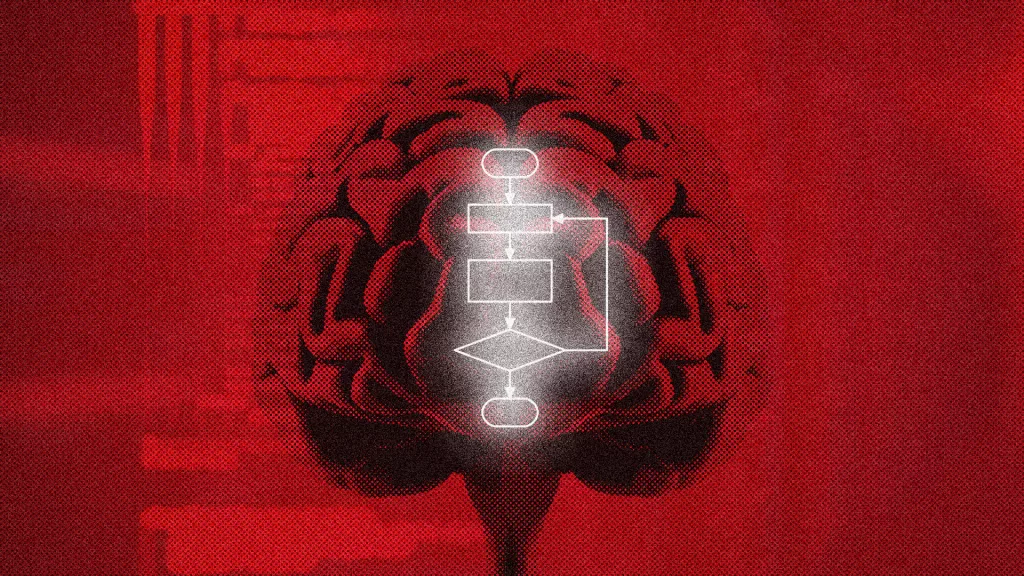
For raw data to become a strategic decision, it must go through a refinement process that we at Isita have perfected under our Data Transformation methodology.
A. Curation and Smart Tagging
Machine learning is only as good as the data it is trained on. In the initial phase, our engineers apply deep cleaning techniques to remove “noise” from the data.
This includes normalizing formats and detecting anomalies that could skew results. In 2026, this process is highly automated, but expert supervision by our Tech Talent ensures that the business context is never lost.
B. Adaptive Model Training
Unlike static algorithms, the models we implement are adaptive. Using reinforcement learning techniques, the system learns from its own successes and mistakes. If an inventory recommendation was not optimal, the model adjusts its internal parameters for the next iteration. This self-correcting capability is what allows Isita’s solutions to maintain their relevance in volatile markets.
C. Deployment in the Workflow (In-Stream Analytics)
An insight that arrives late is a useless insight. That’s why we focus on “in-stream” analytics deployment. This means that intelligence does not reside in a monthly report, but in everyday tools: the CRM that suggests the best offer for a specific customer, or the logistics system that reschedules routes in milliseconds.
3. Applied Machine Learning: Use Cases That Redefine Industries
To understand the impact of transforming raw data into decisions, we must look at how specific sectors are using Isita’s Innovation solutions to achieve exponential returns on investment.
Retail and Omnichannel Sector
In an omnichannel environment, customers interact with brands through social media, physical stores, and mobile apps. The raw data from these interactions is often scattered. Isita unifies these flows and applies clustering models to identify hyper-specific audience segments. This allows companies to move from mass campaigns to individual conversations, increasing conversion rates by an average of 35%.
Manufacturing and Predictive Maintenance
In heavy industry, sensor data (IoT) is massive and complex. Through time series analysis, machine learning can detect vibrations or temperature changes imperceptible to the human eye that precede mechanical failure. Moving from preventive (time-based) to predictive (condition-based) maintenance reduces operating costs and avoids plant shutdowns that could cost millions of dollars.
Finance and Risk Management
Fraud detection is perhaps the clearest example of the transition from data to decision. Isita’s systems analyze millions of transactions per second, identifying suspicious behavior that deviates from the user’s profile. The decision to block a transaction is made autonomously, protecting both the institution and the end customer with a minimal margin of error.
4. The Role of Observability in Decision Making
For senior management to trust a machine-suggested decision, the system must be transparent. This is where Observabilidad becomes essential. At Isita, we do not deliver “black boxes.” Each Machine Learning model has layers of explainability that allow managers to understand which variables influenced a given prediction.
If the system suggests closing a production line or changing suppliers, it provides the logical reasoning behind that suggestion. This trust in technology is what allows organizations to scale their operations and adopt a truly data-driven culture.
5. Human Talent as the Orchestrator of Intelligence
Despite the sophistication of 2026’s algorithms, the human factor remains the central pillar of Isita’s strategy. Our Tech Talent vertical seeks not only code specialists, but “data translators”: professionals capable of understanding a business problem and modeling it mathematically.
Machine learning amplifies human capacity, it does not replace it. By freeing analysts from repetitive data processing tasks, they can focus on high-level interpretation and defining the long-term vision. Collaboration between an expert Staff Augmentation team and robust AI models is the formula that guarantees success in digital transformation.
6. Setting the Stage for the Future: Toward Strategic Autonomy
The transition from raw data to strategic decisions is the first step toward operational autonomy, which we will explore in Q4. A company that masters its data flow today through Machine Learning is a company that tomorrow will be able to operate with an efficiency that once seemed like science fiction.
At Isita, we are committed to accompanying organizations through every stage of this refinement. From data pipeline engineering to the deployment of the most sophisticated models, we ensure that every bit of information is a step toward profitability and innovation.
Conclusión
Real competitiveness in 2026 cannot be bought; it must be trained. Transforming raw data into strategic decisions is a process of modern alchemy where Isita’s technology acts as the catalyst. By investing in state-of-the-art machine learning and BI capabilities, companies are not only optimizing their current processes, but also building the resilience necessary for tomorrow’s challenges.
Data is the new oil, but only those with the ability to refine it will be able to drive the global economy. With Isita, your organization has access to the most advanced intelligence refinery on the market.
Call to Action
Is your organization simply accumulating data, or are you using it to dictate the future of your market? Discover how our Innovation and Analytics solutions can transform your information into strategic power.